
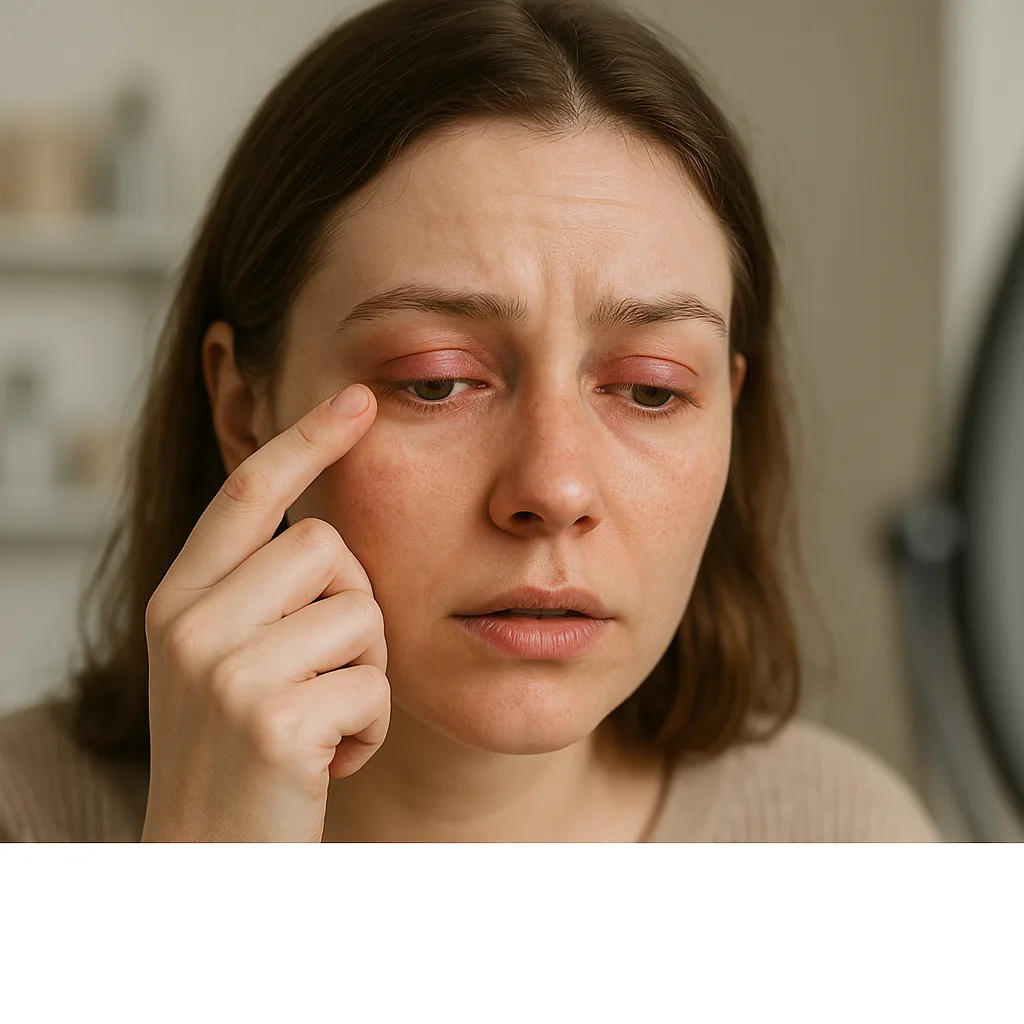
If you've noticed your eyelids looking red, flaky, or scaly, you're probably feeling a mix of annoyance and low-key worry. Nobody really talks about this stuff, but it's way more common than you'd think. The skin on your eyelids is paper-thin compared to almost everywhere else on your body, which makes it a magnet for irritation, allergic reactions, infections, and inflammation. The frustrating part? "Red scaly eyelids" can stem from half a dozen different causes, and what clears it up for one person might actually make things worse for you.
I'm going to walk you through the most common reasons your eyelids might look and feel this way, the clues that help narrow down the cause, and what actually helps. I'll also cover the red flags that mean you need a doctor, not a DIY fix. By the end, you should have a much better sense of what you're dealing with and how to handle it.
Fast Answer
Red, scaly eyelids most commonly come down to contact dermatitis (a reaction to something touching your skin), seborrheic dermatitis (a condition that targets oily areas), atopic dermatitis (eczema), blepharitis (eyelid inflammation tied to bacteria or oil gland dysfunction), or psoriasis. Occasionally it's an infection. Treatment hinges entirely on the underlying cause, which is why paying close attention to your other symptoms, itching, burning, crusting, timing, triggers, matters more than most people realize.
Why This Is Trickier Than It Looks
Your gut reaction is probably to reach for some over-the-counter cream or chalk it up to dry skin. But the eyelid area is finicky territory, and slapping on the wrong product can backfire. Steroid creams that work wonders on your elbows? They can thin eyelid skin if you use them too long. That moisturizer you love for the rest of your face might contain fragrances or preservatives that set off a reaction right where your skin is most vulnerable.
Here's the other wrinkle: red, scaly eyelids often don't have a single clean cause. You might have a baseline condition like eczema that flares when you try a new eye makeup. Or blepharitis that spirals when you're stressed and slack on eyelid hygiene. Seasonal allergies, a different shampoo, even the nickel in your eyeglass frames, any of these can pile on.
So a one-size-fits-all approach almost never cuts it here.
The Main Causes Behind Red, Scaly Eyelids
Contact Dermatitis
This happens when something that touched your eyelids triggers a reaction. Makeup is an obvious culprit, but don't overlook nail polish (you touch your eyes way more than you think), hair dye, shampoo, or nickel in eyeglass frames. The eyelids puff up, turn red, get itchy, and develop dry, flaky patches. Symptoms typically show up anywhere from a few hours to a couple of days after exposure.
Atopic Dermatitis (Eczema)
If you've dealt with eczema before, your eyelids are a prime target. The skin goes red, dry, scaly, and maddeningly itchy. Flare-ups tend to follow stress, weather shifts, or allergen exposure. Rubbing only makes it worse, which kicks off a cycle that's hard to break.
Seborrheic Dermatitis
This one goes after areas loaded with oil glands, eyelids, scalp, the creases beside your nose. You'll see redness, greasy-looking scales, and sometimes yellowish crusting. It's connected to an overgrowth of yeast that naturally lives on the skin. If you already deal with dandruff, there's a decent chance this could show up on your eyelids too.
Blepharitis
Blepharitis means inflammation along the eyelid margins, often driven by clogged oil glands, bacteria, or a combination. Your eyelids look red and scaly, but you'll also notice crusting right at the lash line, a gritty sensation in your eyes, or a burning feeling. It's chronic by nature and tends to wax and wane.
Psoriasis
Less common on the eyelids, but it happens. Psoriasis produces thick, silvery scales over red patches. If you have psoriasis on other parts of your body, it can migrate to the eyelids.
Infections
Fungal or bacterial infections can produce red, scaly eyelids too, though they usually bring extra signs along for the ride, oozing, heavy crusting, or redness that keeps spreading.
What to Compare Before Deciding What's Going On
| Factor | Why It Matters |
|---|---|
| Itching vs. burning | Itching points toward allergic or eczema-related causes; burning suggests blepharitis or direct irritation |
| Crusting or discharge | Typical of blepharitis or infection, less common with contact dermatitis or eczema |
| Both eyelids or just one | Both sides often means a systemic skin condition; one side may suggest contact with an irritant or an infection |
| Timing and triggers | Did it start after a new product, a change of season, or a particularly stressful stretch? |
| Other skin issues | Dandruff, eczema patches elsewhere, psoriasis plaques, that context helps you connect the dots |
| Eye symptoms | Grittiness, redness of the eye itself, or vision changes steer toward blepharitis or infection |
Common Mistakes and Overlooked Details
Using the wrong moisturizer. Heavy, fragrance-loaded creams can clog the tiny glands around your eyes or spark reactions. Stick with something very gentle, fragrance-free, and made for sensitive skin. Plain petroleum jelly works surprisingly well for a lot of people.
Over-cleaning. Scrubbing your eyelids with harsh soap strips away natural oils and dries things out even more. Gentle is the only approach that makes sense here.
Ignoring indirect culprits. When your eyelids are flaring, think beyond just what you put on your face. Shampoo, conditioner, hairspray, laundry detergent on your pillowcase, hand lotion you applied before touching your eyes, all fair game.
Using steroid creams too long. A mild steroid ointment can tamp down inflammation in the short term, but extended use on eyelid skin can cause thinning, cataracts, or elevated eye pressure. Don't use these without a doctor weighing in, and definitely not for weeks on end.
Assuming it'll resolve on its own. Sometimes it does. But chronic redness and scaling can damage the skin over time or open the door to secondary infections if you just ignore it.
Skipping eyelid margin cleaning for blepharitis. If blepharitis is the issue, warm compresses and gentle eyelid scrubs (diluted baby shampoo on a cotton pad, or commercial eyelid wipes) are non-negotiable. Without this step, the condition just keeps recycling.
Practical Questions to Ask Before You Do Anything
- Did this start after I used a new product, makeup, skincare, something for my hair?
- Do I have a history of eczema, psoriasis, or dandruff?
- Are both eyelids affected, or just one?
- Is it itchy, burning, or both?
- Is there crusting, particularly near the lash line?
- Are my eyes themselves red, gritty, or uncomfortable?
- Have I been rubbing or scratching a lot?
- Does it get better or worse at certain times of day, or in different environments?
Your answers help point you toward the cause. If you're drawing blanks, or things are getting worse, stop guessing and see a doctor.
When to See a Professional
Book an appointment with a dermatologist or ophthalmologist if:
- The redness and scaling haven't budged after a week of basic care
- You have pain, vision changes, or significant discharge
- The skin is cracking, oozing, or looks infected
- Only one eyelid is affected and it's progressively worsening
- Over-the-counter treatments aren't helping, or they're making things worse
- You genuinely can't figure out what's causing it
A professional can examine things properly, test for allergens or infections when needed, and prescribe targeted treatments, prescription anti-inflammatory creams, antibiotic ointments, antifungal medication, whatever fits.
What You Can Do Right Now
Stop using potential irritants. Go minimal. Strip back your skincare and makeup to the bare essentials and switch to fragrance-free, hypoallergenic products.
Try a gentle cleanser. Lukewarm water and a very mild, fragrance-free cleanser. Pat dry, don't rub.
Moisturize carefully. A thin layer of plain petroleum jelly or a fragrance-free ointment for sensitive skin can work well. Skip heavy creams with ingredient lists that read like a chemistry textbook.
Warm compresses for blepharitis. If you suspect blepharitis (crusting at the lash line, gritty eyes, redness along the eyelid edge), hold a warm compress over your closed eyes for 5 to 10 minutes once or twice a day. Follow up by gently cleaning the eyelid margins with diluted baby shampoo on a clean cotton pad.
Hands off. Rubbing makes everything worse. It spreads irritants, damages already fragile skin, and invites bacteria.
Check your pillowcase. Wash it with fragrance-free detergent. While you're at it, consider whether your laundry products could be contributing.
Keep a symptom diary. Write down when it flares, what you've used that day, how it looks. Patterns emerge faster than you'd expect.
Frequently Asked Questions
Can allergies cause red, scaly eyelids? They can. Seasonal allergies make your eyelids puffy and itchy, which leads to rubbing, which leads to irritated, flaky skin. Allergic contact dermatitis, a direct reaction to a product, is also extremely common on the eyelids.
Is it safe to use hydrocortisone cream on my eyelids? Only for a short stretch, and really only with a doctor's guidance. Hydrocortisone brings down inflammation effectively, but using it for more than a week or two on eyelid skin risks thinning, pigmentation changes, and other complications.
Could my eye makeup be the problem even if I've used it for years? Yes, 100%. You can develop a sensitivity to a product after years of no issues. Makeup also expires. Old products break down and can harbor bacteria or release new irritants.
What if only one eyelid is affected? One-sided symptoms sometimes mean you touched that side with something irritating, lotion on your hand, a chemical, something random. But they can also point to an infection or a more localized issue. If it doesn't clear up quickly, get it looked at.
Can stress make this worse? Definitely. Stress is a well-documented trigger for eczema flares, seborrheic dermatitis, and blepharitis. It doesn't create the condition from scratch, but it can absolutely ramp it up.
How long does it usually take to clear up? That depends on what's behind it. Contact dermatitis often settles within days once you remove the offending product. Eczema and blepharitis are chronic and usually need ongoing management rather than a one-time fix. Infections typically clear within a week or two with the right treatment.
Bottom Line
Red, scaly eyelids are uncomfortable and genuinely frustrating, but they're usually manageable once you pin down the cause. Stop assuming it's "just dry skin" and start paying attention to patterns, triggers, and accompanying symptoms. Simplify your routine, ditch potential irritants, and treat the area gently. If things aren't improving or you can't sort out what's going on, don't sit on it too long, see a professional. Your eyes are not the place to wing it.
Disclaimer: This article is for informational purposes and is not a substitute for professional medical advice, diagnosis, or treatment. If you have persistent or worsening eyelid symptoms, consult a dermatologist or ophthalmologist.