
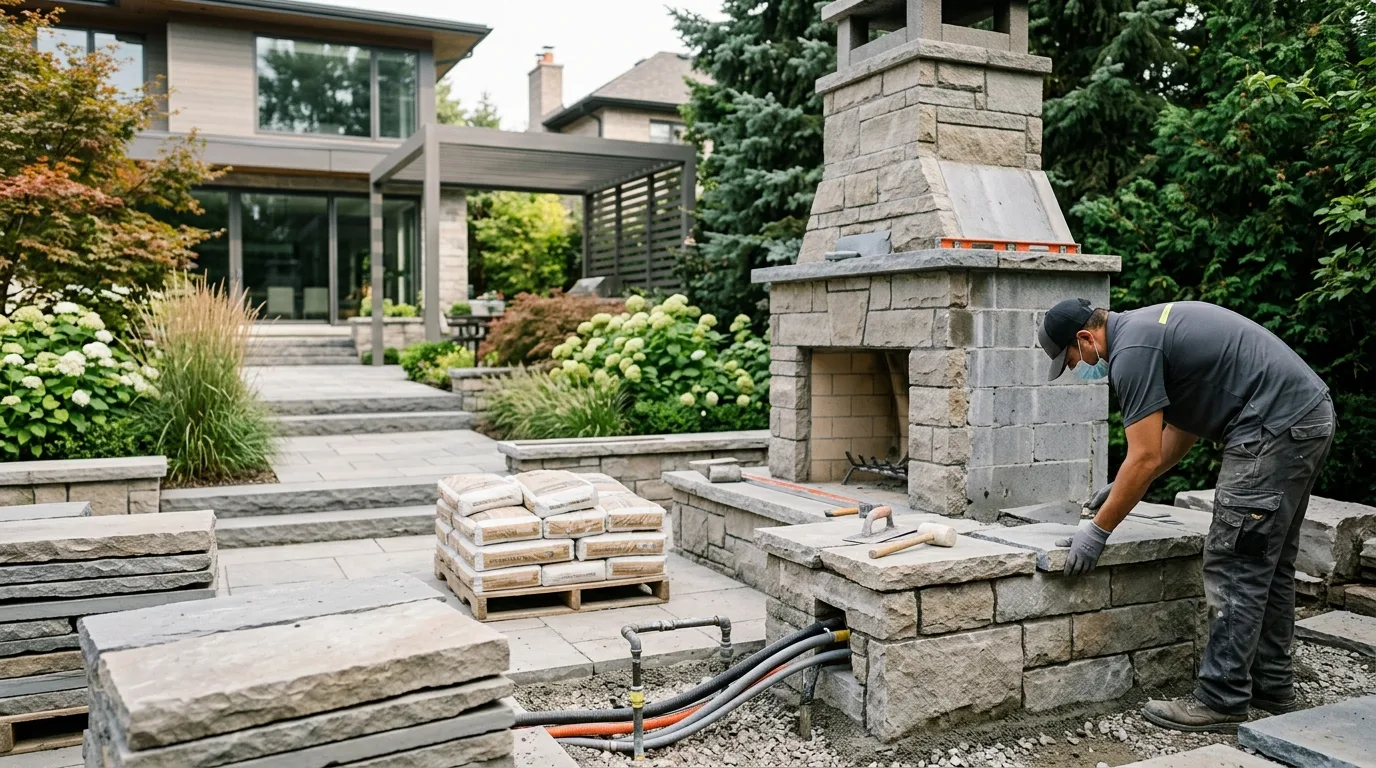
You want a fireplace in your backyard. It sounds simple enough, some brick, a chimney, maybe a contractor for a weekend. But once you start calling around for quotes, the numbers jump all over the place. One company says $3,000. Another quotes $15,000. A third mentions permitting, gas lines, and masonry work that might push past $25,000.
So what's actually going on here?
The truth is, outdoor fireplace installation isn't a single project. It's a whole category that covers everything from a prefab metal insert you can wrestle into place yourself to a full custom stone structure with a built-in pizza oven. The price depends on what you're building, where you're building it, and how much of the work you're willing (or able) to take on yourself. This article walks through the real factors that affect cost, what you should compare before hiring anyone, and the common mistakes that turn a weekend upgrade into a months-long headache.
By the end, you'll know which questions to ask and what actually matters when you're staring at an $8,000 quote trying to figure out if it's fair or if you're getting taken for a ride.
Fast Answer
Outdoor fireplace installation typically ranges from $1,500 for a basic DIY kit to $20,000+ for a custom masonry structure. The biggest cost drivers are: materials (prefab metal vs. brick vs. stone), fuel type (wood-burning vs. gas), foundation and site prep, labor complexity, permits, and whether you need utility hookups like gas lines or electrical. Location matters too. Contractors in high-cost areas charge more, and some regions require inspections or special clearances. Most homeowners land somewhere between $3,000 and $10,000 for a mid-range fireplace installed by a professional.
Why This Is More Complicated Than It First Appears
When you picture an outdoor fireplace, you're probably imagining the finished product: stone surrounding a crackling fire, some seating nearby, a nice focal point for the patio. What you don't see is the foundation work underneath, the flue requirements, the setback rules from your property line, or the fact that your soil might need compacting before a single brick gets laid.
Here's the thing: outdoor fireplaces aren't regulated the same way in every county. Some towns treat them like permanent structures, which means permits, inspections, and setback requirements. Others don't care as long as it's not gas-fueled. And if you do need a gas line run from your house to the fireplace location, you're adding plumbing work, trenching, and possibly a licensed gas fitter to the project.
Then there's the question of what you're actually building. A prefab fireplace kit from a big-box store might cost $1,200 and take a weekend to put together. A custom stone fireplace built by a skilled mason could take two weeks and run $18,000. Both are technically "outdoor fireplaces," but they're completely different projects with completely different price tags.
The Main Factors That Affect Cost
Material choice is the single biggest variable. Prefab metal or cast-stone kits are the cheapest and easiest to install. They come in sections, you assemble them on a level base, done. Brick fireplaces cost more because you're paying for both materials and skilled labor, masons don't work cheap, and good brickwork takes time. Natural stone (fieldstone, limestone, stacked slate) sits at the top of the price range because it's heavy, irregular, and demands an experienced mason who knows how to fit and finish it properly.
Fuel type changes everything. Wood-burning fireplaces are the traditional choice, but they require a proper chimney or flue to vent smoke safely. That means height, masonry work, and a spark arrester at the top. Gas fireplaces are cleaner and easier to control, but you'll need a gas line run to the site (unless you're using a propane tank). Running a new gas line 50 feet across your yard can tack on $1,000 to $3,000 depending on what's involved. Electrical hookups for gas ignition or accent lighting add another few hundred on top of that.
Foundation and site prep catch a lot of people off guard. You can't just build a fireplace on grass. Most installations require a concrete slab or compacted gravel base to prevent settling and cracking down the road. If your yard slopes or the soil is soft, you might need grading or additional foundation work before anything else happens. A simple 4x6 concrete pad might cost $300 to $500 if you pour it yourself, or $800 to $1,500 if you hire it out.
Labor costs vary by region and complexity. A straightforward prefab installation might take a handyman or landscaper a day or two ($500 to $1,500 in labor). A custom brick or stone fireplace could keep a skilled mason busy for a week or more, with labor running $3,000 to $8,000 depending on the design. If you're in a high-cost metro area, add 20% to 40% on top of those numbers.
Permits and inspections depend entirely on where you live. Some municipalities require building permits for any permanent outdoor structure. Others only step in if it's gas-fueled or over a certain height. Permit fees usually run $100 to $500, but the real cost is time, waiting for approval can delay your project by weeks. And if the inspector flags something that doesn't meet code, you'll pay to fix it and schedule a re-inspection.
Size and features obviously play a role. A basic 3-foot-tall fireplace with a simple firebox is one thing. Start adding a 6-foot chimney, a built-in wood storage nook, a stone hearth, a mantel, or a pizza oven, and you're multiplying labor and material costs fast. Every extra feature adds time and complexity.
What to Compare Before Choosing or Researching Further
Don't just compare the bottom-line price. Ask what's included. Does the quote cover site prep, or are you on the hook for leveling the ground and pouring a pad? Does it include the chimney cap, spark arrester, and flue liner (if wood-burning)? What about cleanup and haul-away of debris?
Compare material quality. Not all brick is the same. Not all stone is cut and fitted with equal care. If one contractor is quoting natural stone at half the price of another, ask what type of stone they're using and whether it's locally sourced or shipped in. Shipping heavy stone across the country adds serious cost, and if the quote seems too low, something's being cut somewhere.
Check contractor credentials. For masonry work, you want someone who has a portfolio of completed fireplaces, not just patios or retaining walls. For gas work, make sure they're licensed to run gas lines in your state. Ask for references and photos of past projects. A cheap quote from someone who's never actually built a fireplace before is a gamble you don't want to take.
Clarify fuel type and venting early in the process. If you want wood-burning, make sure the design includes a proper flue and chimney tall enough to draft correctly (usually at least 12 feet total height, though local codes vary). If you want gas, confirm whether you'll need a new line run or if an existing line is close enough to tap into.
Understand permit requirements before you commit to anything. Call your local building department and ask if you need a permit for an outdoor fireplace. Some towns require a site plan showing setbacks from property lines, fences, and structures. Ignoring this step can lead to fines or, worst case, being forced to tear down what you just built.
Ask about warranty and maintenance. Prefab units often come with a manufacturer's warranty (typically 1 to 5 years). Custom masonry usually doesn't carry a formal warranty, but a good contractor should stand behind their work. Find out what kind of upkeep you're signing up for, chimneys need occasional cleaning, gas lines need inspection, and certain types of stone may need resealing every few years.
Common Mistakes and Overlooked Details
Skipping the foundation. People see a fireplace sitting on a patio and assume it's stable enough. It's not. Without a proper base, settling and cracking are practically guaranteed. Even a basic gravel-and-sand base needs to be compacted correctly to hold up.
Underestimating setback requirements. Your fireplace might need to be 10 or 15 feet from your house, your fence, or your neighbor's property line. Check local codes before you pick a spot. Having to relocate a half-built fireplace because it's too close to the property line is both expensive and humiliating.
Ignoring wind and smoke flow. If your prevailing wind blows smoke directly toward your house or your patio seating area, you'll never actually use the thing. Spend some time outside on a few different days and pay attention to where the wind comes from before you finalize the location.
Choosing the wrong fuel type for your lifestyle. Wood-burning fireplaces look and feel incredible, but they require seasoned firewood, regular ash cleanup, and chimney maintenance. Gas fireplaces are convenient, flip a switch, you've got fire, but they lack that crackle and woodsmoke smell. Be honest with yourself about how much effort you're realistically going to put in.
Not budgeting for the stuff around it. Seating, patio pavers, lighting, a wood storage box, it all adds up. The fireplace itself might be $6,000, but turning the space into a usable outdoor room that you actually want to hang out in could easily double that number.
Hiring based on price alone. The lowest bid is sometimes the lowest quality. A poorly built fireplace can crack, smoke badly, or fail inspection. It's worth paying more for someone who genuinely knows what they're doing. I've heard too many stories of homeowners going with the cheapest option and then paying more to fix it than the next-highest bid would have cost.
Questions Worth Asking Before Deciding
Use this checklist when you're talking to contractors or planning a DIY project:
- Do I need a building permit for this fireplace in my city or county?
- What type of foundation or base is required, and is that included in the quote?
- If it's wood-burning, what's the total chimney height and does it meet code?
- If it's gas, how far is the nearest gas line and what will it cost to extend it?
- What materials are included (brick type, stone type, firebox material, chimney cap)?
- Is the contractor licensed for masonry and/or gas work?
- How long will the project take, and what's the payment schedule?
- What happens if we hit rock or need extra site prep during excavation?
- Is cleanup and debris removal included?
- What kind of maintenance will this fireplace require annually?
FAQ
Can I install an outdoor fireplace myself? Yes, if you're going with a prefab kit and you're comfortable with basic construction, leveling, mixing mortar if needed, following instructions. DIY kits from home improvement stores range from $1,000 to $3,000 and can realistically be assembled in a weekend. Custom masonry or gas installations are a different story and usually best left to professionals.
Do outdoor fireplaces need chimneys? Wood-burning fireplaces absolutely need a chimney or flue to vent smoke properly. The required height depends on your local code and the fireplace design, but expect at least 10 to 12 feet total. Gas fireplaces don't need a traditional chimney, but they still require proper ventilation and clearance from combustible materials.
How much does it cost to run a gas line for an outdoor fireplace? Typically $500 to $3,000 depending on the distance from your home's gas meter to the fireplace location, soil conditions, and whether you need to trench under pavers or concrete. Longer runs or difficult terrain push costs higher.
What's the difference between an outdoor fireplace and a fire pit? An outdoor fireplace is a vertical structure with a chimney that directs smoke upward and away from you. A fire pit is an open bowl or ring, usually low to the ground, with no chimney at all. Fireplaces tend to be more formal, larger, and better at controlling smoke. Fire pits are simpler, cheaper, and more casual.
How close can an outdoor fireplace be to my house? It depends on local codes, but 10 to 15 feet is a common minimum. Some areas require even more clearance for wood-burning units. Always check with your building department before picking a location.
Do outdoor fireplaces add value to a home? They can, particularly in markets where outdoor living spaces are a selling point. A well-built fireplace integrated into a finished patio or deck adds both visual appeal and usable square footage. But a poorly done or awkwardly placed fireplace won't move the needle much, and some buyers might actually see it as a maintenance liability rather than a perk.
Conclusion
Installing an outdoor fireplace isn't as simple as picking a design and calling a contractor. The cost swings wildly based on what you're building, where you're building it, and how much prep work the site needs. A prefab kit on a simple patio might come in around $2,000 all in. A custom stone fireplace with gas hookup, permits, and site grading could hit $20,000 or more.
The key is knowing what questions to ask before you commit to anything. Understand the material differences, clarify what's actually included in each quote, check your local permit rules, and make sure your contractor has the right experience for the job. Take the time to compare properly, and you'll end up with a fireplace that works the way you want it to, without surprise costs or code violations catching up with you later.
Disclaimer: This article provides general information about outdoor fireplace installation costs and considerations. Requirements for permits, setbacks, and construction standards vary significantly by location. Always check with your local building department and consult licensed professionals (masons, gas fitters, contractors) for advice specific to your property and project.