
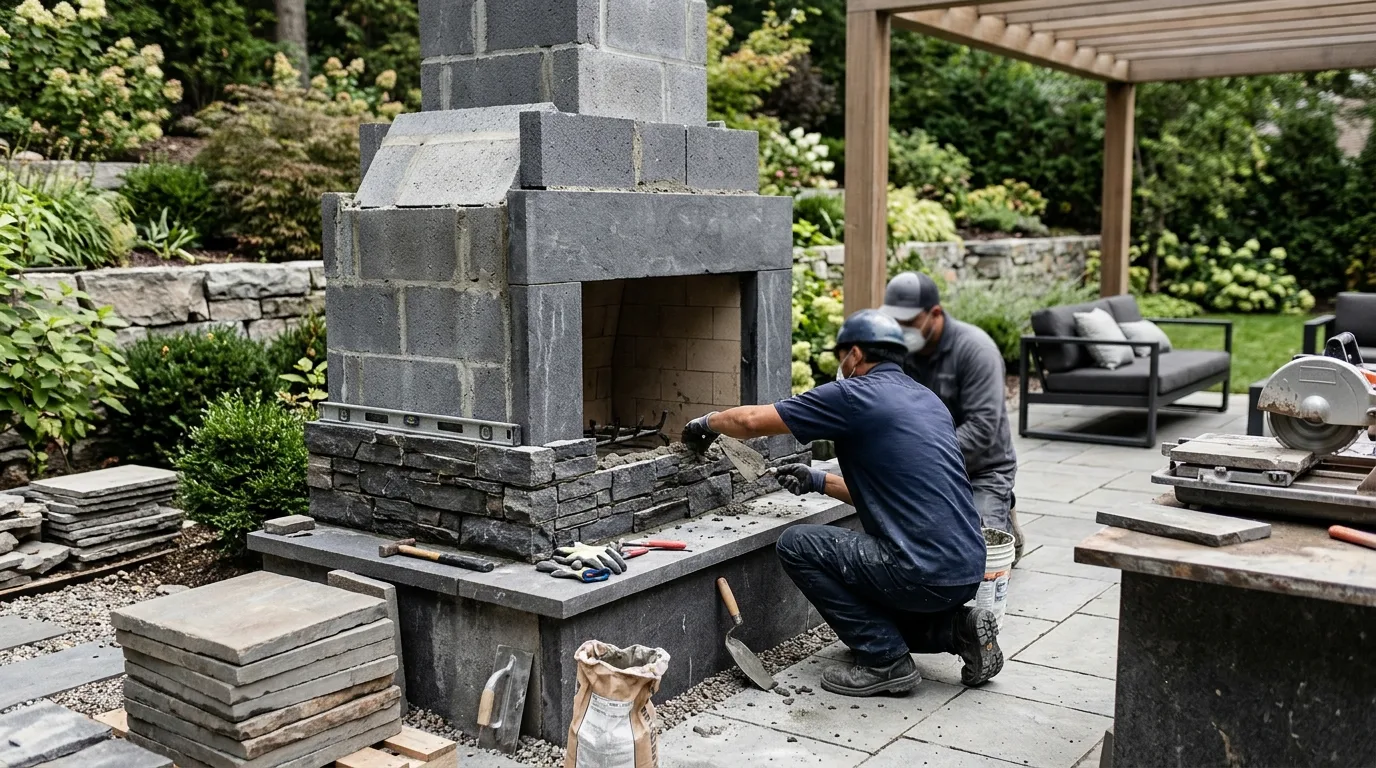
You've seen the photos. The backyard that feels like an extension of the living room, anchored by a gorgeous stone fireplace where people actually want to hang out. But then you start calling contractors or browsing prefab options online, and the quotes come back anywhere from $1,500 to $20,000. What's going on?
Here's the honest truth: outdoor fireplace installation isn't one project. It's really several different projects rolled together, and the final scope depends on what you're building, where you're putting it, and what your local code inspector is going to demand. A chiminea sitting on a paver pad? You could knock that out this weekend. A built-in masonry fireplace with a real foundation and chimney? That's contractor territory with permits, inspections, and weeks of labor.
By the time you finish reading this, you'll understand why prices swing so wildly, what actually drives cost and complexity, and what questions you need to ask before signing anything. Whether you're thinking about doing it yourself or hiring a pro, you'll walk away knowing what matters.
Fast Answer
Most outdoor fireplace installations break into three buckets. Portable units (fire pits, chimineas, portable fireplaces) run $200 to $2,000 and don't require permits in most areas. Prefab fireplace kits made of metal or lightweight materials cost $1,500 to $5,000 for the unit, plus another $500 to $3,000 for professional installation on a proper base. Custom-built masonry fireplaces start around $5,000 and regularly hit $10,000 to $20,000+ depending on size, materials, foundation work, gas line installation, and local building codes.
The biggest cost drivers: foundation or base prep, whether you're burning wood or adding a gas line, chimney height and material, labor rates in your area, and permit/inspection requirements.
Why This Costs More Than You'd Think
Most people picture the fireplace itself. The stone, the firebox, maybe a mantel. But that's just one piece of what you're actually paying for.
Start with the base. You need something stable and fireproof underneath, which could mean pouring a concrete pad, laying a gravel foundation, or installing pavers over compacted base material. Got a sloping yard or unstable soil? You might need deeper footings or even a retaining wall. No good contractor is going to cut corners here, because a shifting base leads to cracks, leaning, and eventually a real safety problem.
Then there's fuel. Wood-burning fireplaces are simpler to install (no gas lines to worry about), but they need a taller chimney for proper draft and spark arrestors to satisfy fire codes. Gas fireplaces require a licensed plumber or gas fitter to run a line from your house, install shutoff valves, and make sure everything meets code. That work typically runs $500 to $1,500 depending on distance and how easy it is to access the route.
Labor is where the bill really grows. Masonry work is skilled, slow, and not cheap. A good mason charges $50 to $100+ per hour depending on your market. A custom stone fireplace might take three to five days of hands-on work, and that's not counting foundation prep or any surrounding hardscaping.
And don't overlook permits. Many municipalities require them for permanent outdoor structures, especially anything with gas, a chimney above a certain height, or a structure sitting close to property lines. Permit fees vary, but plan on $100 to $500 plus the time it takes to schedule and pass inspections.
The Main Factors That Affect Your Total Cost
Fireplace Type and Material Prefab metal fireplaces are the budget-friendly route. They're lighter, faster to install, and skip the custom masonry entirely. Most decent units fall between $1,500 and $3,500. Custom masonry fireplaces built from brick, stone, or stucco are heavier, longer-lasting, and significantly pricier. Materials alone can run $2,000 to $8,000 depending on the stone you choose and how complex the design gets.
Foundation and Site Prep A basic paver base on level ground might cost $300 to $800 in materials and labor. A poured concrete pad with footings and rebar (which you'll need for any heavy masonry build) can run $1,000 to $3,000. Building on a slope, adding drainage, or working around tree roots and underground utilities? Tack on more.
Fuel Type Wood-burning fireplaces are mechanically straightforward but demand a taller chimney and good ventilation. Gas fireplaces need a gas line, regulator, and ignition system. Propane works if natural gas isn't available to your property, though you'll need tank access and possibly a dedicated line. Gas line installation generally adds $500 to $1,500 to the project.
Chimney Height and Design A short chimney on a prefab unit is usually included in the price. A tall custom chimney clad in matching stone? That can tack on $1,500 to $5,000 depending on height and materials. Taller chimneys draft better, but they cost more to build and might need extra bracing or flashing if they sit close to a roofline.
Location and Access If your crew has to haul stone and equipment through a tight side yard or across landscaping you care about, expect higher labor costs. Difficult access can inflate the total price by 10% to 20%.
Local Labor Rates In expensive metro areas, masonry labor hits $100+ per hour. In smaller towns and rural areas, skilled masons might charge $50 to $70 per hour. Always get at least three quotes.
What to Compare Before Choosing a Fireplace
| Factor | Why It Matters |
|---|---|
| Wood vs. gas vs. propane | Gas burns cleaner and is easier to control; wood delivers that classic ambiance but means storing firewood and maintaining a chimney. Propane works anywhere but involves tank refills. |
| Prefab vs. custom masonry | Prefab is faster and cheaper; custom masonry lasts longer, adds more resale appeal, and can be designed to match your home's look. |
| Chimney height and design | Taller chimneys draft better and satisfy code in more areas, but they cost more and may need engineering in high-wind zones. |
| Foundation requirements | Heavy masonry demands a solid footing; prefab units can sometimes sit on a well-prepared paver base. Ask your contractor exactly what's needed. |
| Permit and inspection needs | Skipping permits can mean fines, failed inspections when you sell, or insurance headaches after a fire. Always check local requirements. |
| Proximity to structures and property lines | Fire codes typically mandate specific setbacks from your house, garage, fences, and neighbors. Violating them can mean tearing the whole thing down later. |
Common Mistakes and Overlooked Details
People underestimate what the foundation costs. A fireplace that weighs several thousand pounds needs serious support beneath it. Skimp on the base and you're looking at cracks and settling within a year or two.
Spark arrestors and chimney caps get forgotten too. These aren't optional extras. Most fire codes require them on wood-burning units, and they're what keep embers from landing on your roof or drifting into your neighbor's yard.
Gas line routing matters more than most people realize. Running a line under a deck, through a finished patio, or around mature tree roots adds both cost and complication. Think about the route early in the planning process.
And here's one I've seen blindside homeowners: some HOAs and local ordinances ban outdoor fireplaces outright, or they require specific setbacks, materials, or designs. Check before you buy anything. A $4,000 prefab fireplace isn't worth much if code enforcement tells you to rip it out.
One more thing people tend to skip over: long-term maintenance. Masonry fireplaces need periodic repointing and chimney cleaning. Gas units should get an annual inspection of the burner and gas connections. Budget for upkeep, not just the build.
Questions Worth Asking Before You Decide
- Do I need a permit for this project, and what does the inspection process look like?
- What's included in the installation quote (base prep, gas line, chimney, labor, cleanup)?
- How deep does the foundation need to be for the fireplace I'm considering?
- What are the setback requirements from my house, property lines, and other structures?
- If I'm going with gas, what will it cost to run a line to the fireplace location?
- Does the contractor pull permits, or is that my responsibility?
- What's the estimated timeline from contract signing to final inspection?
- What kind of warranty or guarantee comes with the work?
- Are there material upgrades (stone veneer vs. full stone, stainless vs. mild steel) that affect how long things last?
- What maintenance will I need to handle each year, and what should I hire out?
Frequently Asked Questions
Can I install an outdoor fireplace myself? You can handle a prefab unit on a prepared base if you're reasonably handy, but anything involving gas lines, deep foundations, or tall chimneys belongs in the hands of a licensed professional. Most jurisdictions require licensed contractors for gas work and permitted structures.
How much does a basic prefab outdoor fireplace cost installed? Figure $2,000 to $5,000 total for a mid-range prefab metal or lightweight stone unit, including a paver or gravel base and professional installation. Gas line work adds $500 to $1,500 on top of that.
How long does a custom masonry fireplace take to build? Plan on one to three weeks depending on how complex the design is, what the weather's doing, and your contractor's schedule. Straightforward designs might wrap up in a week. Elaborate stone fireplaces with seating walls and custom details take longer.
Do outdoor fireplaces add value to a home? A well-built outdoor fireplace in good shape can definitely boost curb appeal and may lift your resale value, particularly in markets where outdoor living spaces are a selling point. But don't bank on getting every dollar back. Think of it as an amenity that makes your home stand out to the right buyer.
What's the difference between an outdoor fireplace and a fire pit? An outdoor fireplace is a vertical structure with a firebox and chimney. A fire pit is typically a low, open basin at ground level. Fireplaces direct smoke upward and often incorporate seating areas or cooking features. Fire pits are simpler, cheaper, and more flexible in terms of placement.
Can I use my outdoor fireplace year-round? In most climates, absolutely, though snow and ice can make getting to it a chore. Gas fireplaces light up instantly in cold weather. Wood-burning units work great too, but you need dry, seasoned wood, and you may face restrictions during burn bans or high fire danger periods.
Wrapping Up: Plan First, Build Smart
An outdoor fireplace can genuinely transform how you use your backyard. But it's not a simple plug-and-play purchase. The real cost hinges on what you're building, where it's going, and what your local codes require. Prefab units go in faster and cost less, but they're not as permanent. Custom masonry is an investment, and one that can last decades when it's done properly.
Start by checking local permit requirements and setback rules. Get multiple quotes from licensed contractors and make sure you understand what each quote includes. If you're leaning DIY, stick to prefab units on straightforward bases and leave gas line work to someone with a license.
Take your time with this one. A well-installed outdoor fireplace will reward you with years of use. A rushed job or a cheap shortcut will reward you with repair bills and regret.
Disclaimer: This article provides general information about outdoor fireplace installation. Building codes, permit requirements, and installation standards vary by location. Always consult a licensed contractor and your local building department before starting any permanent outdoor structure project. Gas line work must be performed by a licensed professional in most jurisdictions.