
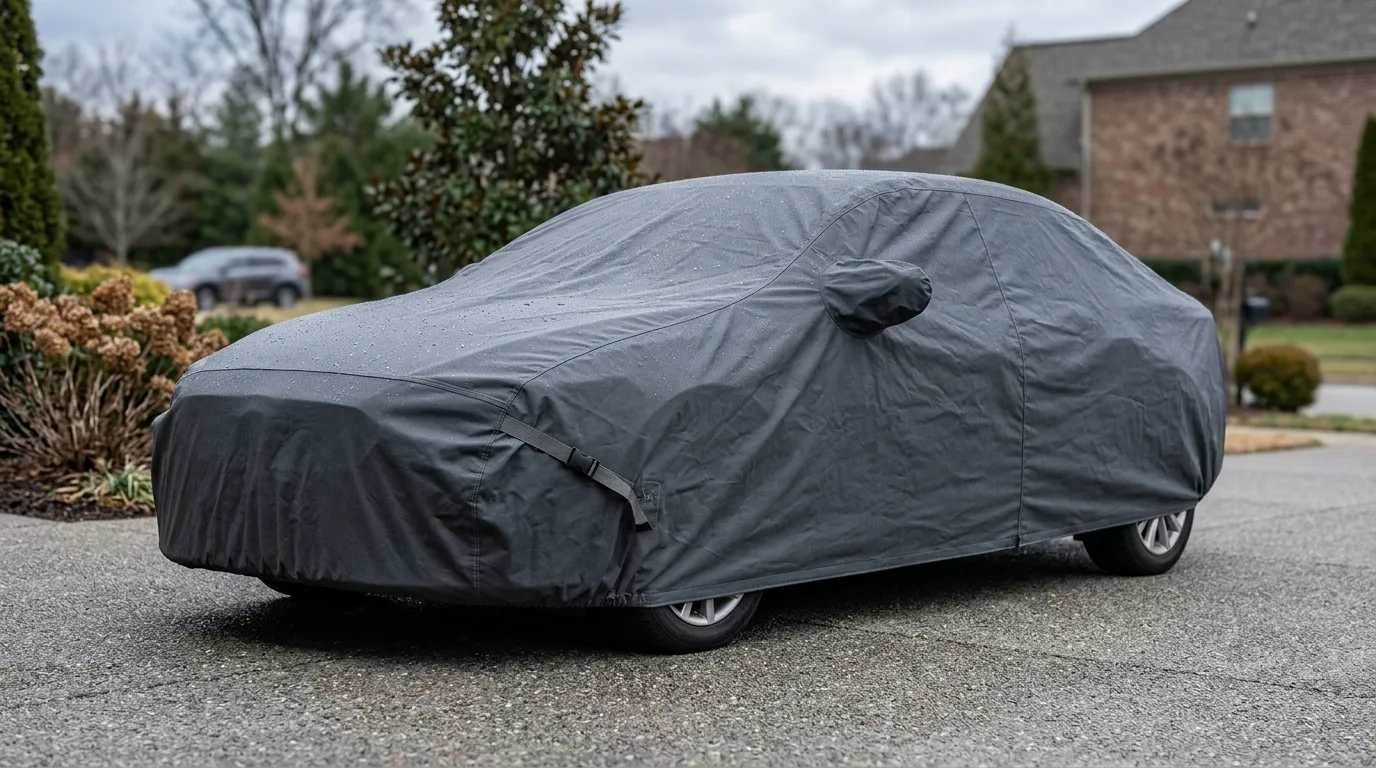
You park your car outside every day. Rain, sun, bird droppings, tree sap, those pollen storms in spring, that neighbor's cat who's decided your hood is a heated bed. A car cover sounds like a smart solution until you realize most of them turn into shredded fabric or a mildewed mess within six months.
The best outdoor car covers aren't just waterproof tarps. They need to handle UV rays that break down cheap materials, resist wind that can sandpaper your paint with trapped dust, breathe enough to prevent moisture buildup underneath, and stay put during storms without tearing apart at the seams. Some covers genuinely protect your car. Others damage it faster than leaving it uncovered would.
By the end of this, you'll know what separates a $50 cover that disintegrates by summer from one that actually lasts multiple seasons. You'll understand what specific materials and features matter for outdoor storage, and how to match a cover to your real weather conditions instead of falling for marketing claims about "all-weather protection."
Fast Answer
The best outdoor car covers use solution-dyed fabrics (polyester or polypropylene) with multiple layers, UV-resistant coatings, and breathable membranes that block rain while letting moisture escape. Cheap single-layer covers trap condensation and tear easily. Look for reinforced grommets, elastic hems or tie-down straps, soft inner liners to prevent scratches, and warranties longer than one year. Custom-fit covers stay on better and protect more than universal sizes. Expect to spend $80-$200 for decent outdoor durability, and more for custom fits or extreme weather protection.
Why This Gets Complicated Fast
Most car covers are sold with vague claims: "waterproof," "all-weather," "maximum protection." But waterproof without breathability creates a greenhouse effect. Cheap waterproof coatings crack in cold weather. Single-layer covers let UV rays through and flap in the wind until they wear through your clear coat.
I've personally seen covers advertised as outdoor-ready that were really built for garage storage. The material feels thick in the store, but six weeks of summer sun turns it brittle. Or the cover fits great on day one, then shrinks after the first rain. Or it's truly waterproof but doesn't breathe at all, so you pull it off and find mildew growing on the seats because moisture had nowhere to go.
Then there's fit. A universal cover might technically "fit" your sedan, but if it's loose, wind gets underneath and turns the whole thing into a paint-sanding machine.
The Main Factors That Actually Matter
Fabric Type and Layer Count
Solution-dyed polyester and polypropylene resist UV degradation far better than cheaper nylon or basic polyester. Multi-layer construction (usually 3-5 layers) combines a waterproof middle layer with breathable outer and soft inner layers.
Single-layer covers are lighter and cheaper, but they can't handle moisture or abrasion well. If you're parking outside in a region with real weather, plan on multiple layers.
UV Resistance
Here's the thing most people miss: sunlight breaks down fabric faster than rain does. A cover without UV inhibitors will fade, crack, and tear within months of outdoor use. Look for covers specifically labeled UV-resistant or UV-stabilized, and check if the manufacturer mentions how many hours of sun exposure the material is rated for. Some specify 1,000+ hours. Others stay conveniently vague.
Breathability vs Waterproofing
You need both. Waterproof membranes keep rain out. Breathable layers let moisture vapor (from temperature changes, humidity, condensation) escape. If the cover traps moisture, you're creating the perfect environment for mold, mildew, and rust.
Fit: Custom vs Semi-Custom vs Universal
Custom-fit covers are tailored to your car's exact make, model, and year. They fit snugly, have mirror pockets, and don't flap around. Semi-custom covers fit a range of similar-sized vehicles reasonably well. Universal covers come in generic size categories (compact sedan, full-size SUV, etc.) and tend to be loose.
Loose covers move in the wind. Movement means friction. Friction means scratches, even if the inner lining is soft.
Wind Resistance Features
Elastic hems, tie-down straps, reinforced grommets, buckles under the car, and built-in cable locks all help keep the cover from blowing off. Lightweight covers without secure fastening systems? They end up in your neighbor's yard during the first windstorm.
Inner Lining
A soft fleece or microfiber inner layer prevents scratches. Covers without a protective lining can trap dirt and grit between the fabric and your paint, turning every gust of wind into fine sandpaper.
What to Compare Before Choosing
| Factor | Why It Matters |
|---|---|
| Material composition | Polyester/polypropylene blends last longer outdoors than basic nylon |
| Number of layers | Multi-layer = better breathability + waterproofing |
| UV rating | Determines how long the cover survives in direct sun |
| Fit type | Custom-fit covers protect better and last longer by reducing movement |
| Tie-down system | Straps, grommets, and buckles prevent wind damage |
| Warranty length | 1 year or less is a red flag; 2-4 years suggests real durability |
| Inner lining material | Soft lining prevents paint scratches; rough fabrics cause damage |
| Storage bag quality | Cheap bags rip apart; decent bags make covering/uncovering easier |
Common Mistakes and Overlooked Details
Using a "waterproof" cover without checking breathability. You protect the car from rain but cook it in trapped moisture. It's surprisingly common.
Buying based on the lowest price. A $40 cover that tears apart in six months costs more than a $120 cover that lasts three years. Do the math.
Ignoring the tie-down system. The cover might be high-quality fabric, but if it doesn't stay put in wind, it'll shred itself and scratch your paint in the process.
Putting a cover on a dirty car. Trapped dust and grit get ground into the paint every time the cover shifts. Always wash the car first, or at minimum rinse off loose dirt.
Choosing universal fit for long-term outdoor use. Universal covers work okay for short-term or garage storage. For daily outdoor protection, the loose fit leads to faster wear on both the cover and the car.
Not checking if the cover handles temperature extremes. Some waterproof coatings crack in freezing weather. Some materials get stiff in the cold or turn sticky in extreme heat.
Questions Worth Asking Before Deciding
- What's the worst weather this cover will face? (sun exposure, snow load, high winds, heavy rain, freezing temperatures)
- Does the cover have a breathable membrane or just a waterproof coating?
- What's the warranty, and what does it actually cover? (some warranties exclude UV damage or wind tears, which is pretty telling)
- Is this a custom fit for my car, or a generic size?
- Does the manufacturer specify UV protection hours or just claim "UV resistant"?
- How many layers does the fabric have, and what are they made of?
- What kind of tie-down system does it use, and are the grommets reinforced?
- Does the inner lining feel soft, or is it rough and scratchy?
- If I need to use this cover daily, is it easy enough to put on and take off solo?
- Are replacement parts (straps, grommets, bags) available if something breaks?
FAQ
How long should an outdoor car cover last? A quality outdoor cover should handle 2-4 years of continuous use in moderate climates. Harsh sun or extreme weather shortens that to 1-3 years. Cheap covers often fail within 6-12 months.
Can I leave a car cover on during winter? Yes, if it's rated for snow and freezing temperatures. Make sure it's breathable so moisture doesn't get trapped underneath, and secure it well so heavy snow or ice doesn't tear it. Some covers get stiff or crack in extreme cold, so check the specs.
Do I need a custom-fit cover or will universal work? Custom-fit is better for long-term outdoor use. Universal covers are fine for occasional use or garage storage, but the loose fit causes more wear outdoors. Semi-custom is a decent middle ground if custom pricing is too steep.
Will a car cover scratch my paint? It can. Especially if the inner lining is rough, the cover traps dirt, or it's loose enough to rub against the paint in wind. Always cover a clean car and use a cover with a soft inner layer.
What's the difference between water-resistant and waterproof? Water-resistant covers repel light rain but soak through in heavy downpours. Waterproof covers have a membrane or coating that blocks water entirely. For outdoor use, you want waterproof with breathability.
How do I know if a cover is breathable? Check the product details for terms like "breathable membrane," "moisture vapor permeable," or "prevents condensation." If it just says "waterproof" with no mention of breathability, assume it traps moisture.
The Bottom Line
The best outdoor car cover for you depends on where you park, what weather you're protecting against, and how often you'll use it. A cover that works perfectly in Southern California's dry heat might fail miserably in a humid Florida summer. One that handles rain in Seattle might crack apart during a Minnesota winter.
Start with your actual conditions. Dealing with intense sun? Prioritize UV protection and heat resistance. Heavy rain or snow? Focus on waterproofing, breathability, and secure tie-downs. Windy area? Fit and fastening systems matter more than anything else.
Don't assume price equals quality, but don't cheap out either. A $50 cover simply isn't built for year-round outdoor use. A $120-$200 cover from a reputable brand (Covercraft, Budge, Classic Accessories, OxGord, Coverking) with a multi-year warranty usually gives you real protection without overpaying for marketing fluff.
Check the warranty terms carefully, read reviews from people in similar climates, and make sure the cover actually fits your car model. A well-chosen cover protects your paint, keeps the interior cooler, and saves you from scraping ice or wiping pollen every morning. A poorly chosen one just adds frustration and might actually speed up the damage you were trying to prevent.