
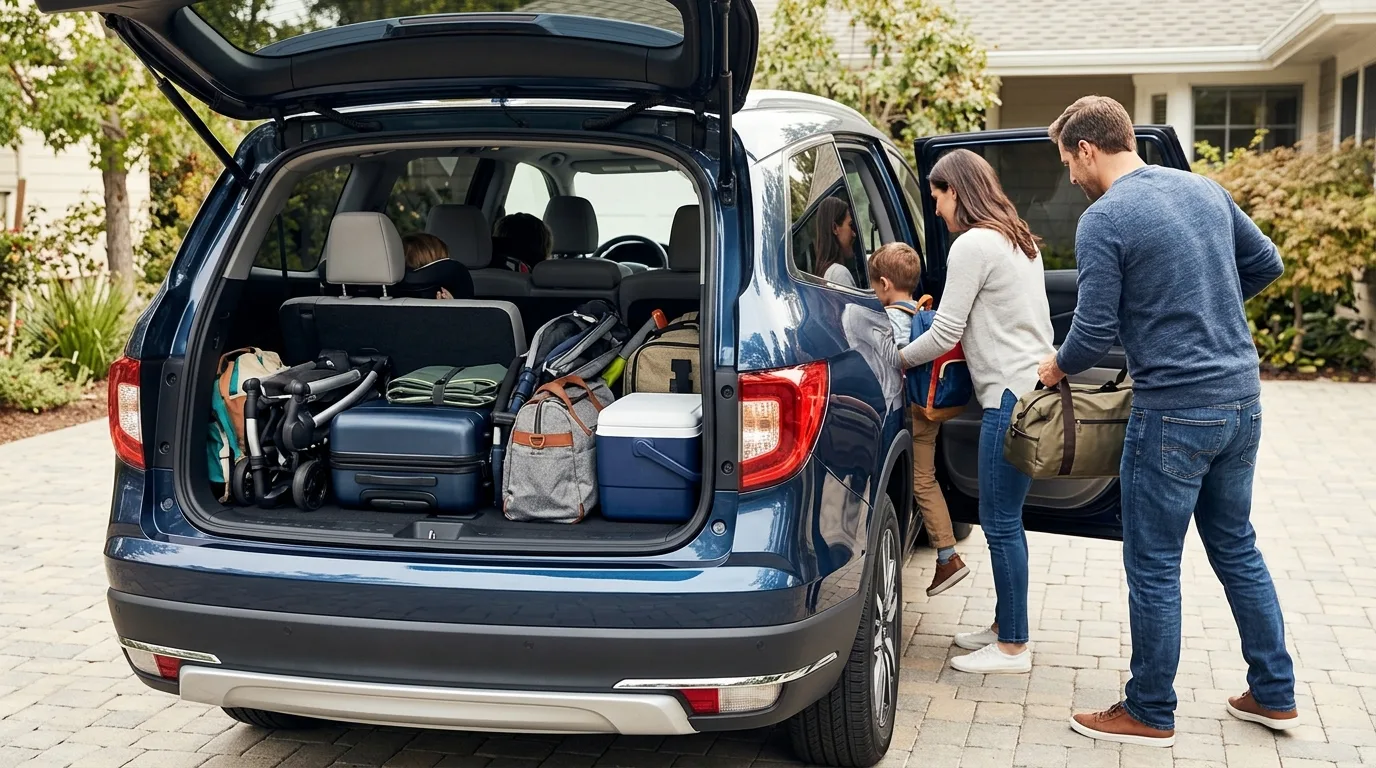
You're looking at 3rd row seating cars because something changed. Maybe you had another kid, your in-laws are visiting more often, or carpool duty just became your reality. Whatever the reason, you've realized that squeezing seven people into a vehicle isn't as simple as counting seats.
Here's the thing: not all third rows are created equal. Some are perfectly fine for adults on a two-hour road trip. Others barely work for kids under ten, and even then, only if you're willing to leave the stroller at home. The difference between a usable third row and a miserable one comes down to factors most people never consider until after they've signed the paperwork.
By the end of this article, you'll understand what separates a genuinely useful 3rd row from a folding bench that's mostly for show. You'll know which factors matter most (hint: it's not just legroom), what to test during a real-world visit to the dealership, and which mistakes buyers make that turn a practical family vehicle into a daily frustration.
Fast Answer
Third row seating works differently depending on the vehicle type. Midsize and full-size SUVs generally offer the most usable space for adults, with easier access and better cargo room even when all rows are up. Minivans provide the most flexible seating and entry, though some buyers avoid them for style reasons. Compact SUVs with third rows (like the Volkswagen Tiguan or Mazda CX-90) can technically seat seven, but that back row usually works only for smaller kids or very short trips.
Key variables: how you access the third row, whether cargo space disappears when the row is up, whether adults can sit back there comfortably, and how much your stroller and sports gear weigh. Climate control, cupholders, and charging ports in the third row matter more than you'd think on long drives.
Why This Is More Complicated Than It First Appears
Most people start by counting seats. Seven seats equals seven passengers, right? Not exactly.
I've seen families test-drive an SUV with all three rows folded flat, fall in love with the cargo space, then realize two weeks later they can't fit groceries and a double stroller once the third row is up. The reverse happens too: someone buys a vehicle assuming the third row is usable, then discovers their 13-year-old has to fold himself in half to sit back there.
"3rd row seating" is a feature that varies wildly in execution. Some automakers design the third row as a core part of the vehicle's purpose. Think minivans, or full-size SUVs like the Chevy Tahoe and Ford Expedition. Others tack it on to check a box on the spec sheet, even though using it regularly creates compromises everywhere else: cargo space, ride comfort, fuel economy.
And then there's access. In a minivan, getting to the third row is simple. Sliding doors and a wide aisle make entry easy, even with a car seat in the second row. In an SUV, you're usually tipping or sliding the second-row seat forward. That works fine until you're doing it in a parking garage while holding a toddler and a diaper bag.
The Main Factors That Affect Whether a 3rd Row Actually Works for You
Size class matters more than brand. A compact crossover with three rows will feel cramped compared to a midsize or full-size SUV. The Volkswagen Atlas is significantly roomier than a Tiguan, even though both come from the same company. Full-size options like the Chevrolet Suburban or GMC Yukon XL offer the most space but drink more fuel and cost more upfront.
Access method changes daily usability. Sliding second-row seats (common in minivans and some SUVs) make getting to the third row way easier than tip-and-slide mechanisms. If you're installing car seats in the second row, check whether you can still reach the third row without removing the car seat every time. Some vehicles require you to fold the seat even when a car seat isn't installed, and that gets old fast.
Cargo space when the third row is up. This is the deal-breaker most people miss. Many 3rd row vehicles lose nearly all cargo room when all seats are upright. Measure your stroller, your grocery haul, your sports equipment. Some vehicles (like the Honda Pilot or Toyota Highlander) keep a reasonable amount of space behind the third row. Others (like the Mazda CX-90 or smaller crossovers) leave you almost nothing.
Who's actually sitting back there. If it's always kids under 12, you have more options. If you need to seat adults regularly for carpools, extended family visits, or airport runs, you'll want at least 30 inches of legroom and a seat cushion that doesn't feel like a park bench. Test it yourself: sit in the third row for ten minutes. If you're uncomfortable in the dealership lot, imagine two hours on the highway.
Climate control and charging ports. Sounds minor until your kids are complaining they're freezing or their tablet dies halfway through a road trip. Rear climate vents and USB ports in the third row make a real difference on long drives.
Fuel economy and ride quality. Adding a third row usually means more weight, which hits gas mileage and handling. Full-size SUVs are comfortable but get 15-20 mpg in mixed driving. Compact three-row crossovers get better mileage but sacrifice space and ride smoothness. Minivans often split the difference with decent fuel economy and a smooth ride.
What to Compare Before Choosing or Researching Further
| Factor | Why It Matters |
|---|---|
| Third row legroom (measured in inches) | Anything under 28 inches is tight for anyone over 5'4". Check the specs, but also sit back there yourself. |
| Cargo space behind third row (cubic feet) | Under 15 cubic feet means you'll struggle with groceries and gear. 20+ cubic feet is usable for daily life. |
| Second row seat type (bench vs. captain's chairs) | Captain's chairs make third-row access easier but reduce seating to six total. Benches seat more but create a tight squeeze. |
| Entry method (sliding door vs. swing door, tip-and-slide vs. pass-through) | Sliding doors (minivans) and wide aisles make entry simple. Tip-and-slide seats are harder with car seats installed. |
| Towing capacity (if you need it) | Full-size SUVs can tow 8,000+ lbs. Most crossovers max out around 3,500 lbs. If you haul a camper, this matters. |
| Fuel economy (city/highway combined) | Expect 15-22 mpg for full-size SUVs, 20-28 mpg for midsize, and 22-30 mpg for compact crossovers and minivans. |
Common Mistakes and Overlooked Details
Assuming "three rows" means seven adults can fit comfortably. Most third rows are designed for kids or occasional adult use. If you regularly haul a full carpool of high schoolers or adults, you need a full-size SUV or a minivan, not a compact crossover.
Forgetting to test access with a car seat installed. Install your actual car seat in the second row during the test drive, then try getting to the third row. Some vehicles make this nearly impossible without uninstalling the car seat first.
Not measuring your cargo. Bring your stroller, your cooler, your sports bag. Load them in with all rows up. If they don't fit now, they won't fit on vacation either.
Ignoring long-term costs. A full-size SUV may nail your space needs, but if it costs $100+ per week in gas and your insurance doubles, the monthly cost adds up fast. Run the numbers before you commit.
Buying based on looks instead of function. Minivans are often the most practical choice for families who need three rows regularly, but some buyers reject them purely for style reasons. If function matters more than image, don't skip the minivan test drive. Seriously.
Overlooking certified pre-owned options. A two- or three-year-old CPO vehicle can save you thousands and still come with modern safety features, Apple CarPlay, and a warranty. The 3rd row on a 2022 model works the same as a 2025.
Questions Worth Asking Before Deciding
- How often will all seven seats actually be occupied? Daily, weekly, or just a few times a year?
- Who's sitting in the third row most often: small kids, teens, or adults?
- Do you need cargo space behind the third row, or can you fold it flat when hauling gear?
- Are you installing car seats in the second row? If so, can you still access the third row easily?
- Do you tow anything (boat, camper, trailer)? If yes, check towing capacity carefully.
- What's your realistic budget for fuel, insurance, and maintenance over three to five years?
- Will you keep this vehicle long enough to justify the upfront cost, or does leasing make more sense?
- Have you sat in the third row yourself for at least ten minutes during a test drive?
FAQ
Can you fit car seats in the third row? Yes, but it's often impractical. Most third rows are harder to access, and installing a rear-facing car seat back there can be tight depending on the vehicle. If you're using car seats regularly, the second row is usually the better spot.
What's the difference between a midsize and a full-size 3rd row SUV? Midsize SUVs (Honda Pilot, Toyota Highlander, Chevrolet Traverse) are easier to park and get better fuel economy, but the third row is tighter. Full-size SUVs (Chevy Tahoe, Ford Expedition, GMC Yukon) offer more space in every row and better towing, but they're harder to maneuver and cost more to run.
Are minivans better than SUVs for third-row seating? For pure functionality, yes. Minivans offer easier access thanks to sliding doors, more flexible seating configurations, and better space efficiency. SUVs give you higher ground clearance, available all-wheel drive, and a different look. It really depends on your priorities.
How much cargo space do you lose when the third row is up? It varies a lot. Compact crossovers may have less than 10 cubic feet behind the third row. Midsize SUVs typically offer 15-20 cubic feet. Full-size SUVs and minivans often provide 25-40 cubic feet. Always check the specific model's specs and test it with your actual gear.
Do all 3rd row vehicles have rear climate control? No. Rear climate vents are common in minivans and higher trims of midsize and full-size SUVs, but they're not always standard on base trims or compact crossovers. Check the options list if this matters to you.
Is it worth paying extra for captain's chairs in the second row? If third-row access is a priority, usually yes. Captain's chairs (two individual seats instead of a bench) create a center aisle that makes getting to the back much easier. The trade-off is losing one seat, bringing you to six total instead of seven. If you rarely fill all seven seats, captain's chairs are often the smarter pick.
Conclusion
Choosing a 3rd row vehicle isn't about finding the one with the most seats. It's about understanding how you'll actually use those seats, how often the third row will be up, and what you're willing to give up in cargo space, fuel economy, or daily maneuverability.
The right vehicle depends on your specific situation: how many people you're moving, how old they are, how much gear you haul, and what your budget allows for upfront cost and ongoing expenses. Before you decide, sit in the third row yourself, load your actual cargo, and test the access method with your real-world setup (car seats included). Ten minutes in the parking lot will tell you more than any brochure.
If you're still comparing options, focus on the factors that affect your daily routine, not the ones that sound good on paper. And if a minivan checks all your boxes but you're hesitating because of style? Ask yourself whether looking cool in the carpool lane is really worth the extra hassle.