
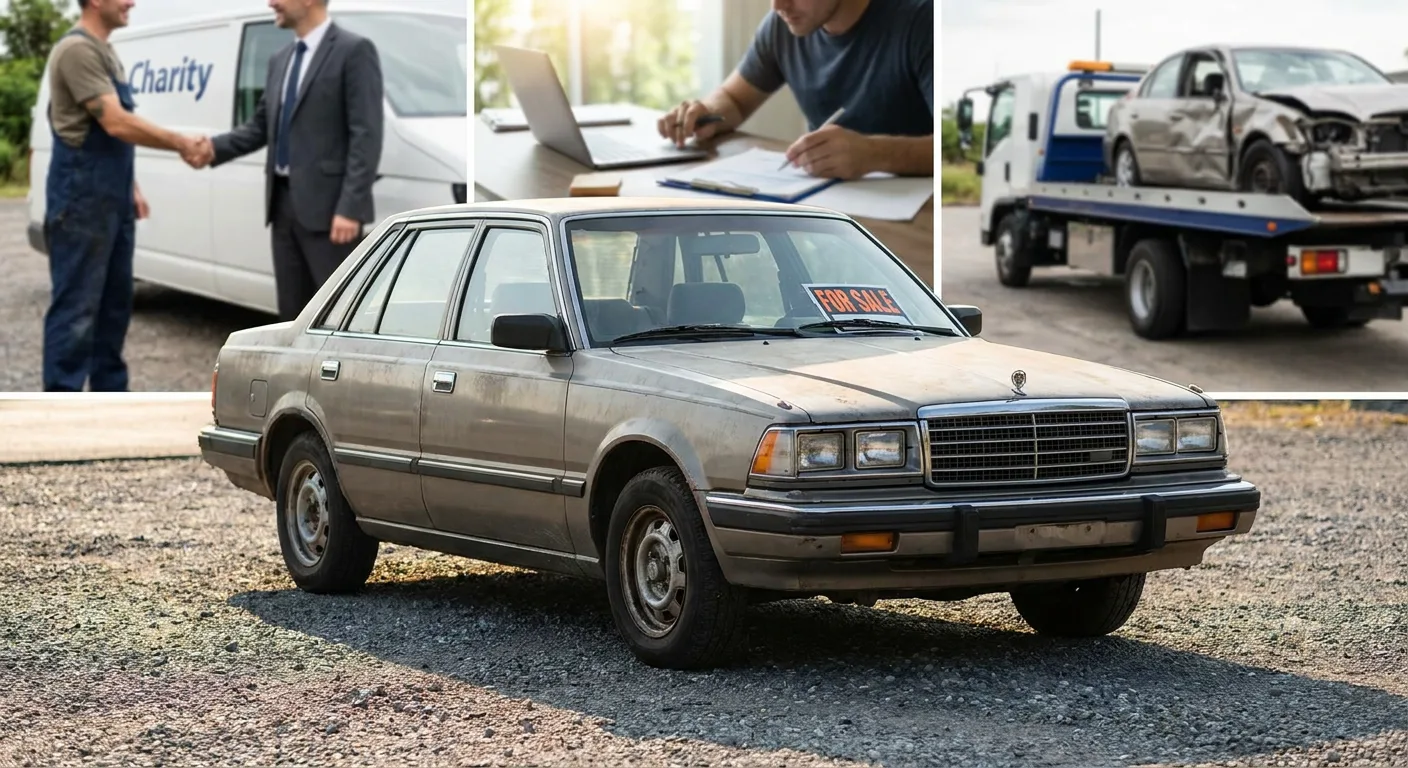
When your car reaches the end of its usable life, you face a surprisingly complex choice. You can donate it to charity, sell it for parts or scrap value, or have a junkyard haul it away. Each option has different financial, tax, and practical implications that most people don't understand until they're already committed.
The right choice depends on your vehicle's condition, your tax situation, how much time you want to invest, and what matters more to you: potential tax savings, immediate cash, or the simplicity of removal. This article breaks down the real differences between scrap car donation and your alternatives so you can make an informed decision based on your specific circumstances.
You'll understand what determines the actual value you receive, what paperwork matters, which option creates the least hassle, and what questions to ask before you sign anything over. The goal is to help you avoid common mistakes and choose the path that delivers the outcome you actually want.
Fast Answer
Scrap car donation may provide a tax deduction based on what the charity sells the vehicle for (usually $500 or less for non-running cars), but you must itemize deductions to benefit. Selling directly to a junkyard gives you immediate cash (typically $100-$500 depending on weight and metal prices) with no tax benefit. Private sale for parts can yield more money but requires significant time and effort. The best choice depends on whether you itemize taxes, how quickly you need the car gone, and whether maximizing cash or charitable impact matters more to you.
Why This Decision Is More Complicated Than It First Appears
Most people assume donating a scrap car automatically creates a valuable tax deduction. In reality, the IRS changed donation rules in 2005 to limit inflated deductions. You can only deduct what the charity actually receives when they sell your vehicle, not an estimated fair market value. If the charity sells your car for $400, your deduction is $400, not the $1,500 you might have hoped for.
The tax benefit only matters if you itemize deductions rather than taking the standard deduction ($13,850 for single filers in 2024, $27,700 for married couples). If your total itemized deductions don't exceed the standard deduction, the car donation provides zero tax benefit.
Meanwhile, selling to a junkyard puts cash in your hand immediately but means no tax advantage. Trying to part out the vehicle yourself might generate more money but can take months and requires storage space, tools, and mechanical knowledge.
Different charities also handle donations very differently. Some operate their own vehicle programs with transparent processes. Others use third-party processors that take 30-50% of the sale price as fees, leaving less for the charity (and less for your deduction). Understanding these differences matters before you make a choice.
The Main Factors That Affect Value and Outcome
Your Tax Situation If you don't itemize deductions, donation creates no tax benefit regardless of the car's value. A $500 donation deduction saves you roughly $120 in taxes if you're in the 24% tax bracket, but only if you itemize and that deduction matters within your total itemized amount.
Vehicle Condition and Running Status A non-running scrap car typically sells for scrap metal value ($100-$500 depending on weight, size, and current metal prices). A running but old car might sell for $500-$2,000 depending on make, model, and local demand. This directly affects both the cash offer from junkyards and the deduction amount from donation.
Metal Prices Junkyards pay based on the weight of recyclable metal in your vehicle and current commodity prices. Prices fluctuate monthly. A large SUV or truck contains more metal than a compact car, affecting offers.
How Quickly You Need It Gone Donation and junkyard pickup both typically happen within 2-7 days with free towing. Private sale or parting out can take weeks or months and may require you to maintain insurance and registration during that time.
Charity Processing Method Some charities (like Habitat for Humanity, Goodwill, or NPR stations) have direct vehicle programs. Others contract with national processors (Charitable Auto Resources, CARS, V-DAC, Donors Trust) that handle logistics but take significant fees. Ask what percentage reaches the charity.
Local Demand for Parts If your car has valuable components (good engine, transmission, specialty parts, wheels), parting it out might generate $1,000-$3,000 total. This requires mechanical knowledge, tools, storage space, online selling skills, and months of effort.
Documentation Requirements Donation requires IRS Form 1098-C from the charity showing sale price (if over $500), plus your own Form 8283 when filing taxes. Selling requires transferring title and liability properly to avoid future issues.
What to Compare Before Choosing
| Factor | Scrap Car Donation | Sell to Junkyard | Part Out Yourself |
|---|---|---|---|
| Speed | 2-7 days, free towing | 1-3 days, free towing | Weeks to months |
| Effort Required | Minimal (phone call, sign title) | Minimal (quote, schedule pickup) | High (listings, meetings, shipping) |
| Cash in Hand | None (tax deduction only) | Immediate payment ($100-$500 typical) | Gradual ($1,000-$3,000 possible over time) |
| Tax Benefit | Yes, if you itemize (deduction = sale price) | No tax benefit | No tax benefit |
| Actual Value Depends On | Charity's sale price, your tax bracket | Metal weight, current scrap prices | Part demand, your selling skill |
| Paperwork | Title transfer, IRS forms if over $500 | Title transfer, bill of sale | Multiple title/liability documents |
| Risk of Problems | Low (charity handles everything) | Low (junkyard assumes liability) | Medium (liability until fully disposed) |
| Storage Needed | None (towed away quickly) | None (towed away quickly) | Yes (secure space for months) |
Common Mistakes and Overlooked Details
Overestimating the Tax Deduction The most common mistake is assuming you can deduct the Kelly Blue Book value of your scrap car. You can only deduct what the charity actually receives after selling it. Most scrap cars sell for under $500, creating a small deduction that matters only if you itemize.
Not Asking About Charity Fees Some donation processors keep 50% or more of the sale price as administrative fees. Ask directly: "What percentage of my car's sale price goes to the charity?" A good answer is 70% or higher.
Ignoring the Standard Deduction Threshold If your mortgage interest, property taxes, and other itemized deductions don't exceed the standard deduction for your filing status, the car donation adds zero tax value. Check with a tax professional before choosing donation for tax reasons.
Accepting the First Junkyard Offer Scrap prices vary by location and buyer. Get quotes from at least three junkyards or online buyers (Peddle, CarBrain, Junk Car Medics) to compare offers. Differences of $100-$200 are common.
Not Canceling Insurance Immediately Once you transfer title and the vehicle is removed, cancel insurance and registration the same day. Keeping coverage on a scrapped car wastes money. Get documentation showing the date of transfer.
Assuming All Charities Are Equal Some charities have efficient, low-overhead vehicle programs that maximize donations. Others outsource everything and the actual charitable benefit is minimal. Research the charity's vehicle program specifically, not just the organization's general reputation.
Not Getting Documentation in Writing For donation, you must receive written acknowledgment (Form 1098-C if over $500). For junkyard sales, get a bill of sale and confirm the junkyard will handle title transfer properly. Keep copies of all documents.
Questions Worth Asking Before Deciding
Use this checklist to clarify your situation and evaluate your options:
- Do I itemize deductions on my taxes, or do I take the standard deduction?
- If I itemize, will this donation actually increase my total deductions above the standard amount?
- What is my effective tax bracket, and what would a $500 deduction actually save me in taxes?
- What is the current fair market value of my car in running vs. non-running condition?
- Have I gotten quotes from at least three junkyards or online scrap buyers?
- If donating, what percentage of the sale price goes directly to the charity versus administrative fees?
- Does the charity operate its own vehicle program or use a third-party processor?
- How quickly do I need this vehicle removed, and do I have storage space if needed?
- Does my car have any valuable parts (good engine, specialty components, aftermarket wheels) worth selling separately?
- Have I confirmed the charity or buyer will provide free towing?
- What documentation will I receive, and is it sufficient for tax or title purposes?
- Have I notified my insurance and DMV that I'm transferring the vehicle?
Frequently Asked Questions
Can I deduct the Blue Book value of my scrap car? No. IRS rules require you to deduct only the actual amount the charity receives when they sell your vehicle. For scrap cars, this is typically the junk value ($200-$500), not the estimated pre-scrap fair market value. You'll receive Form 1098-C showing the actual sale price if it's over $500.
Is it better to donate or sell if my car doesn't run? It depends on your tax situation. If you itemize deductions and are in a higher tax bracket, donation might save you $100-$150 in taxes on a $500 deduction. If you don't itemize or need immediate cash, selling to a junkyard for $200-$400 cash may be more valuable. Compare the after-tax value of each option based on your specific circumstances.
How long does the donation process take? Most charities arrange free towing within 2-7 days after you contact them. You'll sign over the title when they pick up the vehicle. You should receive tax documentation (Form 1098-C) within 30 days after the charity sells the car, showing the sale price for your deduction.
What happens if the charity sells my car for only $200? Your tax deduction will be $200, which saves you roughly $50 in taxes if you're in the 25% bracket (and you itemize). In this case, selling directly to a junkyard for $300 cash might have been more valuable. The deduction amount is tied to the actual sale price, which may be lower than expected for true scrap vehicles.
Do I need to have the car repaired before donating? No. Charities accept vehicles in any condition, including non-running, damaged, or incomplete cars. They sell them at auction or for scrap value. However, the worse the condition, the lower the sale price and resulting tax deduction.
What if my car is worth more as parts than scrap? If your vehicle has a good engine, transmission, or specialty parts, parting it out yourself could generate significantly more money ($1,000-$3,000) than either donation or scrap sale. This requires mechanical knowledge, tools, time, storage space, and comfort with online selling. Consider this option only if you have the resources and patience for a months-long process.
Making the Right Choice for Your Situation
The decision between scrap car donation and your alternatives comes down to three factors: your tax situation, how much cash matters immediately, and how much effort you're willing to invest.
Donation makes sense when you itemize deductions, your total itemized amount exceeds the standard deduction, and you value the charitable contribution over immediate cash. Verify that the charity you choose has a transparent vehicle program with low administrative fees.
Selling to a junkyard makes sense when you need immediate payment, don't itemize deductions, or the tax benefit doesn't justify the lower financial return. Get multiple quotes to maximize your cash offer.
Parting out the vehicle yourself makes sense when the car has valuable components, you have mechanical knowledge and storage space, and you're comfortable with the time investment and ongoing liability until the vehicle is fully disposed of.
Before you commit to any option, get quotes or estimates in writing, confirm all fees and documentation requirements, ask specific questions about timelines and processes, and calculate the after-tax value based on your actual tax situation. The right answer varies significantly based on individual circumstances, and choosing carefully can mean the difference between a frustrating process and a smooth resolution that matches your priorities.